
In Highland Park, Illinois, a minor plumbing issue can become expensive quickly. Older homes, finished basements, lakefront moisture, heavy rain, and winter cold all create reasons to pay attention to small changes in how water moves through a property. A slow drip or a drain that suddenly gurgles may be the first visible sign of a problem.
Homeowners do not need to handle every repair themselves, but regular observation makes a real difference. For local help when an issue is beyond a simple check, Pasquesi plumbing in Highland Park can evaluate symptoms before hidden moisture, backups, or pipe damage spreads through finished areas of the home.
Table of Contents
- 1 Why Small Plumbing Problems Matter in Highland Park
- 2 Early Warning Signs To Watch For in Highland Park Homes
- 3 How To Look For Hidden Leaks
- 4 When Drain Trouble Signals A Larger Issue
- 5 Water Heater Clues That Need Attention
- 6 A Simple Seasonal Plumbing Checklist for Highland Park Homeowners
- 7 Safe Steps Highland Park Homeowners Can Take
- 8 When To Call A Professional in Highland Park
- 9 Final Takeaway
Why Small Plumbing Problems Matter in Highland Park
A damp sink cabinet, weak toilet flush, or occasional faucet drip is easy to postpone. However, repeated moisture can damage wood, drywall, flooring, and stored belongings. The U.S. Environmental Protection Agency notes that household leaks can waste substantial amounts of water over time, and its guidance for finding and fixing household leaks includes simple meter and toilet tests. For example, a loose connection beneath a bathroom sink may drip only when the faucet runs, quietly soaking the cabinet base between uses.
Early Warning Signs To Watch For in Highland Park Homes
Watch for water stains on a ceiling or wall, musty odors near bathrooms or laundry areas, unexpected pressure changes, and unexplained water use. Toilets that run, rock at the base, or refill when nobody has flushed also deserve attention. Other signs include slow drains, unusual water color or odor, and the sound of water moving when every fixture and water-using appliance is off. These clues do not always identify the cause, but they are good reasons to investigate promptly.
How To Look For Hidden Leaks
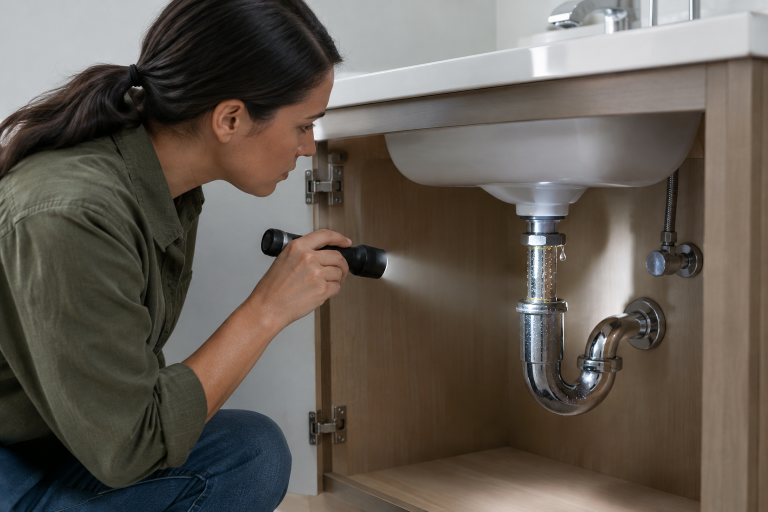
- Check beneath sinks for dampness, mineral residue, swollen cabinet material, or loose connections.
- Inspect toilet supply lines and the floor around each toilet base.
- Look behind the washing machine and around its hoses for moisture or corrosion.
- Examine the water heater area for pooling water, rust, or wet insulation.
- Record the water meter reading, avoid water use for two hours, then check whether it changed.
- Use a flashlight in utility rooms, crawlspaces, and other dark corners.
Moisture behind walls, under floors, or beneath a concrete slab may not be immediately visible. Do not simply paint over a stain or deodorize a musty area. Finding the source is more important than covering the symptom.
When Drain Trouble Signals A Larger Issue
One slow sink may have a local blockage from soap, hair, or debris. Several slow drains at once can point to trouble farther along a shared drain line. Gurgling, foul odors, or water backing up through a lower-level tub, shower, or floor drain should be taken seriously. Avoid repeatedly pouring chemical drain cleaners into a stubborn clog. They may not remove the underlying obstruction and can complicate later service work.
Water Heater Clues That Need Attention
Water heaters often give warning signs before they fail. Check for water around the tank or connections, popping or rumbling noises, inconsistent water temperature, rust-colored hot water, and reduced hot-water supply. A dripping pressure-relief valve also needs evaluation. Do not remove safety components or attempt gas, electrical, or pressure-related repairs without appropriate training.
A Simple Seasonal Plumbing Checklist for Highland Park Homeowners
Spring in Highland Park
- Check outdoor faucets for damage after freezing weather.
- Test the sump pump before seasonal rain becomes a problem.
- Inspect basement drains and look for lingering winter leaks.
Summer in Highland Park
- Inspect hose bibs, irrigation connections, and outdoor spigots.
- Check washing machine and dishwasher supply lines.
- Review water use before leaving for an extended trip.
Fall in Highland Park
- Locate and test the main water shutoff valve.
- Protect exposed pipes before freezing temperatures arrive.
- Check toilets, water heaters, and basement drains.
Winter in Highland Park
- Keep vulnerable plumbing areas warm and open sink cabinets on exterior walls when needed.
- Know how to shut off water if a pipe bursts.
- Never use an open flame to thaw a frozen pipe.
Highland Park homeowners should also keep stormwater in mind. Lake County advises residents to take proactive steps to reduce flood damage, including making sure a sump pump backwater valve is functioning properly. After a major rain, check that the pump runs and that its discharge route is clear.
Safe Steps Highland Park Homeowners Can Take
Keep a bucket, towels, flashlight, and adjustable wrench accessible, and make sure everyone in the household knows the main shutoff location. Simple maintenance may include cleaning faucet aerators, removing hair from drain strainers, or replacing an accessible washer or toilet flapper. Keep notes and photos of recurring problems. Leave wall openings, pressurized pipework, gas lines, and electrical connections to qualified professionals.
When To Call A Professional in Highland Park
Request prompt help when a leak cannot be found or stopped, water is spreading through ceilings or flooring, sewage backs up, multiple fixtures are affected, or pressure drops throughout the home. Also call for water-heater leaks, suspected frozen or burst pipes, heavy corrosion, and any possible gas odor. When safe, shut off water, move valuables away from moisture, take photos, and describe when the symptoms began.
Final Takeaway
Small plumbing changes are early warnings worth noticing. In Highland Park, routine checks before winter cold and after heavy rain can help protect basements, kitchens, bathrooms, and the home’s long-term condition. A working shutoff valve and timely action can limit both water waste and avoidable damage.

