Choosing a luxury watch in Canada is about much more than selecting a famous name or a striking dial. The right piece should feel comfortable through workdays, dinners, weekends away, and changing weather, from dry prairie winters to humid summers near the Great Lakes. Whether you are making your first major purchase or looking at Cartier watches in Canada, start by considering how the watch will actually fit your life.
A luxury watch can mark a graduation, a career milestone, an anniversary, or a personal goal, but it should also be practical enough to enjoy often. A higher price does not automatically make one watch a better choice than another. Fit, movement, materials, service needs, and confidence in the seller all matter long after the initial excitement of buying.
Table of Contents
- 1 Table Of Contents
- 2 Why The Right Watch Matters
- 3 Start With Your Lifestyle
- 4 Choose The Right Movement
- 5 Find The Right Case Size
- 6 Compare Materials And Straps
- 7 Set A Realistic Budget
- 8 Check Authenticity And Paperwork
- 9 Think About Care And Service
- 10 Common Buying Mistakes
- 11 Final Buying Checklist
- 12 Final Thoughts
Table Of Contents
- Why The Right Watch Matters
- Start With Your Lifestyle
- Choose The Right Movement
- Find The Right Case Size
- Compare Materials And Straps
- Set A Realistic Budget
- Check Authenticity And Paperwork
- Think About Care And Service
- Common Buying Mistakes
- Final Buying Checklist
Why The Right Watch Matters
A watch is both a timekeeping object and a personal item worn close to the body. It needs to suit your wrist, wardrobe, routine, and tolerance for upkeep. The long history represented by the watches in Smithsonian collections is a useful reminder that watches have served practical, technical, and expressive roles for generations.
For a Canadian buyer, everyday conditions deserve attention. A watch that is ideal for a climate-controlled office may not be the best match for regular skiing trips, cottage weekends, construction work, or frequent travel. Decide what you need first, then let the design follow.
Start With Your Lifestyle
The best luxury watch is the one that works in real life. A slim dress watch may be excellent for client meetings, formal events, and shirts with close-fitting cuffs. A steel sport watch on a bracelet may be easier to wear with casual clothing, while a rubber strap can make sense for active days and warm-weather travel.
Questions To Ask Before Shopping
- Will you wear it every day, only at events, or mainly on weekends?
- Do you work at a desk, outdoors, or in a hands-on environment?
- Will it be exposed to rain, snow, swimming, or frequent temperature changes?
- Should it work equally well with denim, business clothing, and formalwear?
- Is it a personal purchase, a milestone gift, or an heirloom-minded choice?
Choose The Right Movement
The movement is the mechanism that powers the watch. It affects the ownership experience, including accuracy, thickness, maintenance expectations, and how often you need to interact with the watch.
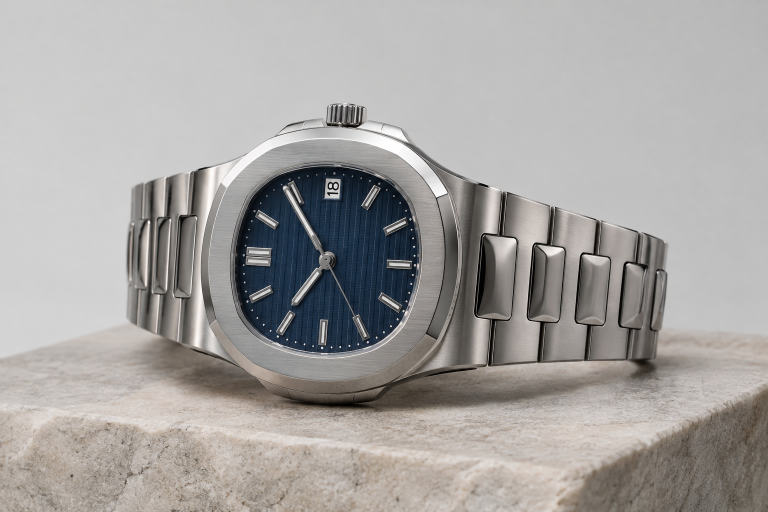
Quartz, Automatic, And Manual-Wind Options
- Quartz: Battery-powered quartz watches are usually the most convenient option for owners who want dependable timekeeping with minimal routine attention.
- Automatic: Automatic mechanical watches use the wearer’s motion to wind their mainspring. They appeal to people who appreciate traditional mechanics and enjoy wearing the watch regularly.
- Manual-wind: Manual watches are wound by hand through the crown. They can create an enjoyable daily ritual, although they demand more attention from the owner.
In simple terms, quartz suits convenience, automatic suits mechanical interest with regular wear, and manual-wind suits buyers who want a more involved connection with the watch. Mechanical watches generally require periodic professional servicing, so include that responsibility in your decision.
Find The Right Case Size
Case diameter matters, but it is not the entire fit story. Lug-to-lug length, case thickness, bracelet width, crown size, and the curve of the lugs can make two watches with the same stated diameter wear very differently.
Simple Measuring Steps
- Measure your wrist with a flexible tape or a strip of paper.
- Compare the case diameter with its lug-to-lug measurement.
- Check that the lugs do not extend beyond your wrist.
- Consider thickness, especially if you often wear long sleeves.
- Try the watch on with its intended bracelet or strap whenever possible.
As a starting point, smaller wrists may compare watches around 34 to 38 millimeters, average wrists may explore 38 to 41 millimeters, and larger wrists may consider 40 to 44 millimeters. These are guidelines, not rules. A rectangular watch or a slim dress case can be worn quite differently from a thick, round diver.
Compare Materials And Straps
Materials change the watch’s appearance, weight, durability, and care requirements. Stainless steel is versatile and commonly chosen for regular wear. Gold offers a warmer, more formal presence but can show marks more readily. Titanium is notably light on the wrist, while ceramic is valued for scratch resistance but may require specialist assessment if damaged.
Bracelets are versatile in both casual and formal settings and are useful in wet weather. Leather straps bring a traditional look but should be kept as dry as possible during rain and snow. Rubber straps can suit active routines, and interchangeable straps can help one watch work across more occasions.
Set A Realistic Budget
Do not treat the purchase price as the complete cost of ownership. Set a limit before viewing specific models, then leave room for sales taxes, insurance, servicing, replacement straps, a travel case, and unexpected repairs. Keep your emergency savings separate from the watch budget.
New and pre-owned watches can both be sensible choices. For pre-owned pieces, condition, originality, service history, and seller protections usually matter more than predictions about future resale value. Buy a watch because you expect to wear and enjoy it, not because it may become more expensive later.
Check Authenticity And Paperwork
For a valuable pre-owned watch, ask to see clear photographs and documentation before committing. Familiarity with basic watch terminology can also help you compare listings and ask more precise questions.
- Review the reference and serial numbers where applicable.
- Check whether the watch details align with any included paperwork.
- Ask for service records and disclosure of replaced parts.
- Inspect the dial, hands, crown, case, and bracelet for visible inconsistencies.
- Confirm the return policy and warranty terms in writing.
- Consider an independent watchmaker’s inspection for a high-value purchase.
Think About Care And Service
Good care protects both the finish and the movement. Wipe away sweat, dust, and moisture with a soft cloth, keep leather straps dry, and store the watch in a clean, dry place when it is not being worn. Avoid unnecessary impacts and strong magnetic sources.
Water resistance is not a blanket promise that a watch is suitable for every water activity. Have water resistance checked after the case has been opened for service or repair, particularly if you plan to wear the watch around pools, lakes, or the ocean.
Common Buying Mistakes
- Choosing a popular model instead of the most comfortable one.
- Focusing only on diameter and ignoring thickness or lug-to-lug length.
- Assuming mechanical is always better than quartz.
- Using the entire budget on the watch and overlooking future service costs.
- Skipping a proper try-on before purchase.
- Trusting listings with vague descriptions, incomplete photos, or unclear policies.
- Buying mainly because of investment talk or social pressure.
Final Buying Checklist
- Does the watch suit your everyday Canadian lifestyle?
- Is it comfortable after several minutes on your wrist?
- Do the lugs stay within the edges of your wrist?
- Does the movement match your preferred level of convenience?
- Are the case and strap materials right for how you live?
- Can you comfortably afford the total ownership cost?
- Are condition, service history, and seller protections clear?
- Would you still want it without resale speculation or outside pressure?
Final Thoughts
A luxury watch should be a pleasure to own, not a purchase you feel obligated to justify. By weighing comfort, movement, materials, authenticity, and long-term costs, you can choose a timepiece that suits both your personal style and everyday needs. Take the time to compare your options, ask the right questions, and prioritize lasting enjoyment over trends or resale predictions. The best watch is ultimately one you will be proud to wear for years.