Being arrested can be disorienting, whether it happens after a stop on I-25, an incident in downtown Denver, or an allegation in a smaller Colorado community. The hours and days that follow matter. Staying calm, protecting your privacy, and organizing the information you received can help you make more informed decisions. For Colorado-focused legal information, some people begin by reviewing resources available through martinlawfirmpc.com.
An arrest is not a conviction, and every case depends on its facts, the charge, the county, and the conditions set by the court. Still, there are practical steps that apply to many Colorado criminal cases. The goal is not to explain the case to everyone around you. It is to preserve important details, meet immediate requirements, and avoid making an already stressful situation worse.
Table of Contents
- 1 Handle the First Few Hours Carefully
- 2 Understand Release Conditions
- 3 Organize Your Paperwork
- 4 Track Court and Administrative Deadlines
- 5 Preserve Your Recollection and Evidence
- 6 Review Any Testing or Search Issues
- 7 Avoid Common Post-Arrest Mistakes
- 8 Prepare for Court
- 9 Consider Prompt Legal Help
- 10 Conclusion
Handle the First Few Hours Carefully
Once you are released, start with the basics. Confirm where you must be, when you must appear, and whether any restrictions apply to driving, travel, contact with another person, alcohol or drug use, or weapon possession. Keep the originals of all paperwork together and make clear digital copies for backup. It is also wise to arrange dependable transportation before driving again. Colorado weather, long distances between communities, and limited transit options outside the Front Range can make last-minute plans difficult. If your license or driving privilege may be affected, do not assume you can legally drive until you have reviewed the notice you received.
Understand Release Conditions
Release from custody may come with bond conditions, a summons, or other court-issued requirements. Read each condition closely. A restriction on contact can include calls, texts, social media messages, messages sent through friends, or visits to a person’s home, workplace, or school. If a condition is confusing, get clarification rather than relying on assumptions. Take conditions seriously even when you believe the allegation is mistaken. A new accusation that you violated a release condition can create separate problems and may affect future bond decisions. Keep a copy of the conditions on your phone and another copy with your other case papers.
Organize Your Paperwork
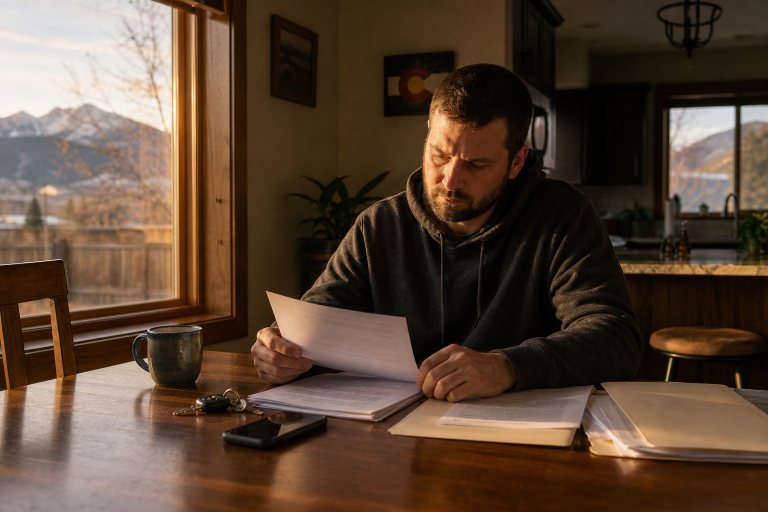
Create one folder, physical or digital, for documents connected to the arrest. Useful materials may include a citation or summons, booking and property receipts, bond paperwork, a notice of the court date, any temporary driving documents, search or inventory paperwork, and any relevant medical or prescription records.
Build a simple case file
- Place court notices and charging papers in one section.
- Keep release conditions and bond records in another section.
- Save photographs, videos, messages, and call records without altering them.
- List possible witnesses, their contact information, and what they may have observed.
- Write the date, time, agency, and deadline shown on each document.
Do not write notes on original documents or discard a page because it appears unimportant. The back of a citation, a receipt, or a temporary permit may contain instructions that affect what you need to do next.
Track Court and Administrative Deadlines
A criminal case may involve more than one timeline. The court process concerns the criminal allegation, while some arrests can also trigger separate administrative matters. For example, a DUI-related arrest can raise driver’s license issues in addition to the criminal charge. The applicable deadline will depend on the notice, the alleged conduct, and the circumstances of the arrest. Put every date on multiple calendars and set reminders several days in advance. Confirm the courthouse, courtroom, and appearance requirements from your actual paperwork. Colorado residents can use the Judicial Branch’s docket search system to check publicly available case scheduling information. Still, the summons or direct communication from the court should remain your primary guide.
Preserve Your Recollection and Evidence
As soon as you can, write a private, factual timeline. Include where you were before the arrest, approximate times, the reason given for a stop or contact, what was said, who was present, and what happened during booking and release. Do not try to make the account sound persuasive. Accuracy and detail are more useful than speculation. Note conditions that may matter, such as lighting, road surface, traffic, weather, fatigue, injuries, medications, language issues, or a medical condition. In Colorado, snow, wind, uneven pavement, altitude, and poor nighttime visibility can affect how a person moves or performs tasks. Also identify possible video sources, including body cameras, dash cameras, nearby businesses, apartment buildings, or transit stations.
Review Any Testing or Search Issues
If the arrest involved field sobriety exercises, a breath test, a blood draw, drug recognition procedures, or a search of your person, vehicle, or phone, preserve every related document. Do not assume that a single test result resolves every issue. Timing, instructions, health conditions, equipment, collection procedures, and the full context may all matter. For impaired-driving cases, the standardized roadside exercises commonly discussed include horizontal gaze nystagmus, walk-and-turn, and one-leg stand tests. The federal guidance on field sobriety tests also recognizes those exercises as part of the standardized battery.
Avoid Common Post-Arrest Mistakes
- Do not post about the arrest, police encounter, or alleged victim on social media.
- Do not delete texts, photographs, videos, location data, or online posts connected to the events.
- Do not contact an officer, witness, or alleged victim to explain your side of the story.
- Do not miss a court appearance or ignore a deadline because you expect a reminder.
- Do not ask friends to coordinate stories or publish messages about the case.
Preservation is different from sharing. Save potentially relevant information in its original form, but keep discussions limited and private. A casual message can be misunderstood when removed from the full context of a conversation.
Prepare for Court
Before your first court date, read the summons from beginning to end. Plan transportation, parking, childcare, and time away from work early. Bring identification and the relevant paperwork. Arrive with enough time to pass through courthouse security and locate the correct courtroom.
A first appearance can involve advisement of rights, release conditions, scheduling, or other procedural steps. It is not necessarily a trial, and appearing does not mean admitting guilt. Listen carefully, avoid interrupting, and make sure you understand any next date or condition before leaving.
Consider Prompt Legal Help
Early legal advice can be especially important when a case involves an injury, accident, alleged domestic violence, a child, a prior conviction, a commercial driver’s license, immigration concerns, firearms, prescription medication, marijuana, or an approaching deadline. It can also help when papers are missing, contradictory, or difficult to understand. Bring your complete file to an initial legal consultation and ask focused questions about deadlines, release conditions, evidence preservation, court procedure, and any separate license-related matter. A careful, organized response after an arrest can protect important options while the Colorado case moves forward.
Conclusion
An arrest can create uncertainty, but organized and careful action can help a person manage the immediate responsibilities that follow. Reviewing every document, following release and bond conditions, tracking court and administrative deadlines, and preserving relevant evidence can reduce avoidable problems. Writing down a factual account while memories are fresh may also help preserve details that could become important later. At the same time, avoiding public discussions, social media posts, evidence deletion, or direct contact with people involved in the case can help protect the integrity of the situation. Every Colorado criminal case is different, and the appropriate response depends on the charges, evidence, court orders, and individual circumstances. When paperwork is unclear or the potential consequences are significant, timely advice from a qualified Colorado criminal defense attorney can help a person understand the applicable process, deadlines, and legal options. Careful preparation does not determine the outcome of a case, but it can help someone respond to the situation with better information and fewer avoidable complications.