
Every year it happens the same way. The flights get booked in early October, the guest room at your sister’s place is claimed, the side dish assignments are sorted in the family group chat, and then someone looks down at the dog sprawled across the kitchen floor and asks the question nobody wanted to answer: “Wait, what are we doing with him?”
Pet care is almost always the last piece of holiday planning, and by the time most owners get to it, the easy options are gone. The good news is that mid-October is the right moment to fix this. You still have a window. The trick is understanding why that window closes so fast and what your two realistic paths actually require.
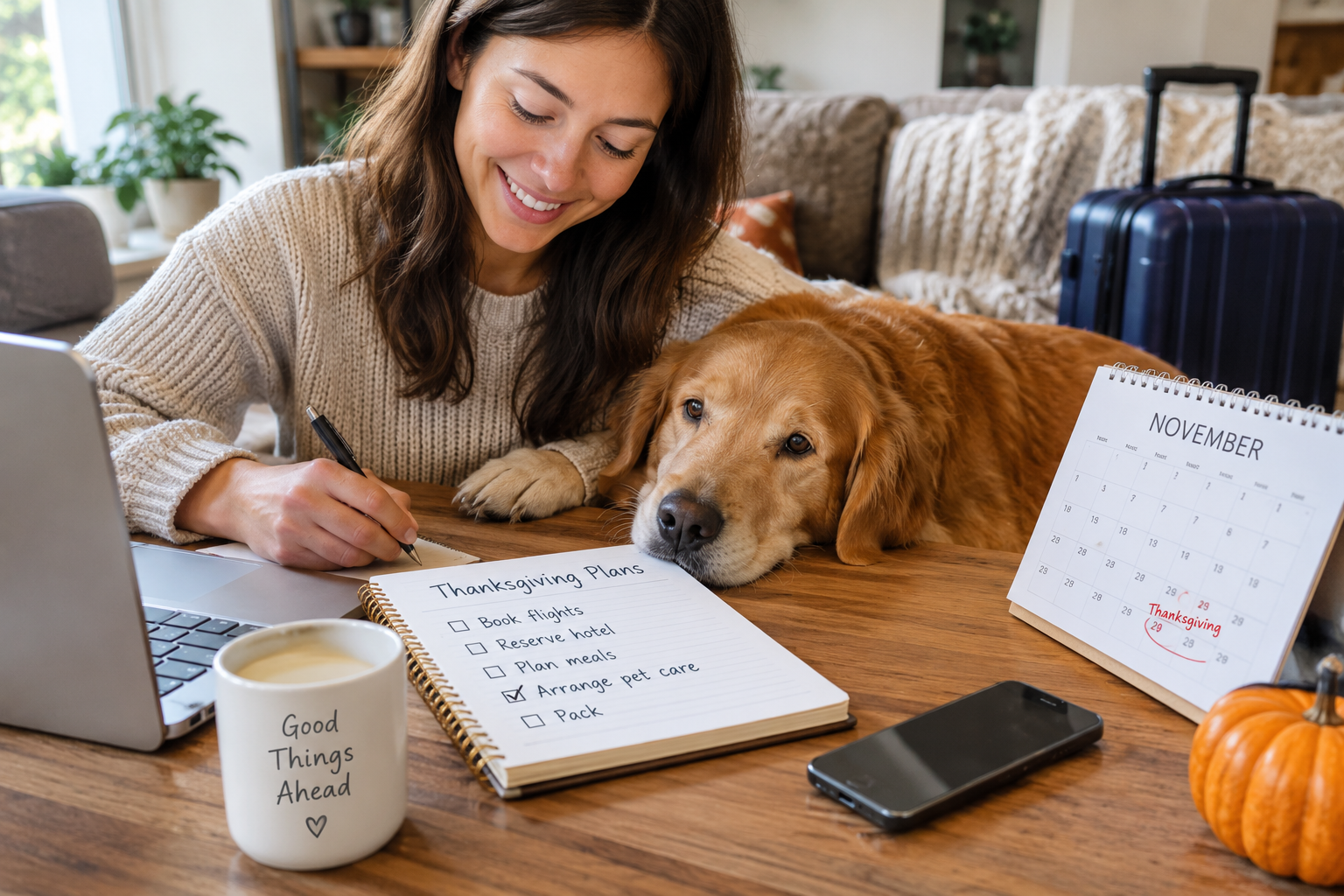
Table of Contents
Why Holiday Pet Care Fills Up Before Everything Else
Holiday demand is compressed into a handful of dates. Unlike a normal weekend, where bookings spread across the calendar, Thanksgiving funnels nearly every traveling pet owner into the same four or five days. Facilities and independent providers can’t stretch to meet that spike.
A few realities drive the crunch:
- The staff takes time off too. The people who care for your dog have families and travel plans, so capacity often shrinks during the exact week demand peaks.
- Repeat clients get their first claim. Many providers quietly rebook their regulars before opening slots to new customers.
- Space is physical, not flexible. A boarding facility has a fixed number of runs or suites. When they’re full, they’re full, with no digital overflow.
If you wait until the week of the holiday, you won’t get the best option. You’re taking whatever is left, if anything is.
Option One: Overnight Stays for Owners Leaving Town
If you’re flying out or driving to relatives, an overnight facility is usually the most straightforward answer. Your dog is supervised, fed on schedule, and somewhere secure while your house sits empty.
But a good facility isn’t a drop-and-go arrangement. Better ones ask for information in advance because that’s what keeps dogs safe and comfortable.
What a Facility Needs From You Ahead of Time
Have these ready when you call or fill out the intake form:
- Vaccination records, typically rabies, distemper, and often Bordetella. Many places won’t accept a dog without current proof.
- Feeding instructions, including brand, portion size, and timing. Pre-portioning meals into labeled bags removes guesswork.
- Medications and dosages, written clearly, with the schedule spelled out.
- A realistic behavior profile. Does your dog resource-guard food? Get anxious around larger dogs? Hate having his paws touched? Honesty here protects everyone.
- Emergency contacts, including your vet and a local backup person who can make decisions if you’re unreachable mid-flight.
Reputable overnight dog boarding providers in Chantilly and similar facilities will walk you through all of this during intake, and their thoroughness is a good sign. A place that asks nothing is a place to be cautious about.
Do a Trial Night Before the Trip
This is the single most overlooked step, and it’s the one that prevents the most misery.
Book one overnight stay a couple of weeks before Thanksgiving. A trial night does several things at once:
- It tells you how your dog actually copes. Some dogs settle in fine. Others pace, refuse food, or show real stress. You want to learn that now, not from a worried phone call while you’re three states away.
- It lets the facility meet your dog calmly. Staff can note quirks and establish a baseline before the holiday rush gets chaotic.
- It surfaces logistical gaps. Maybe the crate size is wrong, or your dog won’t eat the way you assumed. Small problems are easy to solve with lead time.
If the trial goes badly, you still have time to pivot to the second option below.
Mistakes to Avoid With Boarding
- Assuming last year’s facility has space again this year.
- Skipping the trial night to “save money,” since a stressed dog who won’t eat for four days costs you far more in worry.
- Under-reporting behavior issues out of embarrassment. It almost always backfires.
- Forgetting that pickup day is also busy. Confirm hours; many facilities close early or have limited holiday windows.
Option Two: Keeping the Dog Home
Not every dog does well away from home, and not every owner is leaving. Some dogs are deeply routine-bound, elderly, or simply miserable anywhere but their own couch. For them, staying put is kinder.
Some people also forget they need help: those who aren’t traveling but whose normal routine still falls apart over the holiday.
Think about who’s working the hardest during Thanksgiving week:
- Retail staff pulling long shifts through Black Friday.
- Hospital and healthcare workers on holiday rotations.
- Restaurant and hospitality teams slammed by travelers and family dinners.
These owners are home in name only. They’re gone twelve hours at a stretch, and the dog’s midday needs don’t pause for the season.
When In-Home Visits Make More Sense
Consider drop-in visits or midday walks when:
- Your dog is anxious, older, or on medication that needs timed dosing.
- You’re staying local but working extended or overnight shifts.
- You have house guests disrupting the normal rhythm, whether kids, relatives, or other pets, and your dog needs a predictable break away from the noise.
- You want your dog to sleep in his own bed.
What These Visits Usually Cover
A typical drop-in or walk includes:
- A bathroom break and a real walk, not just a yard release.
- A fresh water top-off and scheduled feeding.
- Medication administered on time.
- A few minutes of attention and play so the dog isn’t alone all day.
- A quick note or photo so you know the visit happened.
For owners who work through the holiday, booking a reliable dog walker in Greensboro, NC a few weeks out means the midday gap is covered before shift schedules lock in. Booking early matters for the same reason it does with boarding: good providers fill their holiday routes quickly.
Mistakes to Avoid With In-Home Care
- Waiting until your shift schedule is posted to start looking. Reverse it: line up care, then confirm details.
- Assuming a neighbor’s casual favor is a plan. People get busy, travel, or forget on the one day it matters.
- Not leaving clear written instructions. “He knows the routine” doesn’t help someone who’s never met your dog.
A Simple October Checklist
Before the month ends, work through this:
- Decide on boarding or in-home care based on your dog’s temperament and your travel, not convenience alone.
- Call now, while slots and routes still exist.
- Gather records and instructions so intake is painless.
- Schedule a trial (for boarding) or a meet-and-greet (for in-home care).
- Confirm holiday hours and emergency contacts in writing.
The Real Lesson
The dog was never the problem. The timing was. Holiday pet care breaks down for the same reason every year: people treat it as an afterthought, but it’s a fixed-capacity resource that disappears early.
You don’t need a perfect plan. You need an early one. Handle it in October, and Thanksgiving stays about the people at the table, not a frantic search for someone, anyone, to look after the dog.

