A satisfying New York City sightseeing day does not require a race from landmark to landmark. Whether your priority is an observation deck, a museum, a neighborhood walk, or a Broadway evening, start with a realistic route and a clear purpose. Travelers visiting New York City can use the Empire State Building as a natural Midtown anchor, then shape the rest of the day around nearby streets, meals, and cultural stops.
New York rewards curiosity, but its size can punish an overstuffed schedule. Sidewalks, station entrances, security lines, elevators, weather, and simple decision fatigue all take time. Planning fewer major stops gives you room to notice the energy of a block, pause in a plaza, or change course when a neighborhood feels worth exploring longer.
Table of Contents
- 1 Why Sightseeing Plans Go Wrong
- 2 Choose One Main Experience
- 3 Plan by Area, Not by Popularity
- 4 Match Activities to the Time of Day
- 5 Plan for Crowds Without Chasing Empty Streets
- 6 Use Weather as a Planning Tool
- 7 Build Accessibility into the Schedule
- 8 Manage Budget, Bags, and Breaks
- 9 Sample One-Day Sightseeing Plan
- 10 Common Questions
- 11 Final Thoughts
Why Sightseeing Plans Go Wrong
Maps can make New York look deceptively simple. A few blocks may include crowded crossings, a large station complex, a long attraction entrance, or a wait for an elevator. Problems usually begin when every hour is assigned in advance. One late train or long lunch can make the rest of the itinerary feel like a failure, even when the day is going well.
Instead, plan a sequence rather than a minute-by-minute script. Confirm the day’s route against current and future subway and bus service changes before you head out, especially if your schedule depends on a transfer or a specific station entrance.
Choose One Main Experience
Select the activity your group would most regret missing. In Midtown, that might be an Empire State Building visit, a theater performance, a major museum, or simply an unhurried walk through Bryant Park and nearby avenues. Give that experience the best time slot, then add only two or three nearby possibilities.
- Pick the day’s non-negotiable stop.
- Reserve it if timed admission is available and useful.
- Choose a meal within an easy walk.
- Keep a cultural stop, park, or shopping street as a flexible option.
A balanced Midtown day could include a morning viewpoint, lunch nearby, an afternoon gallery or library visit, and an evening walk toward Times Square or Herald Square. The key is that each addition supports the main event instead of competing with it.
Plan by Area, Not by Popularity
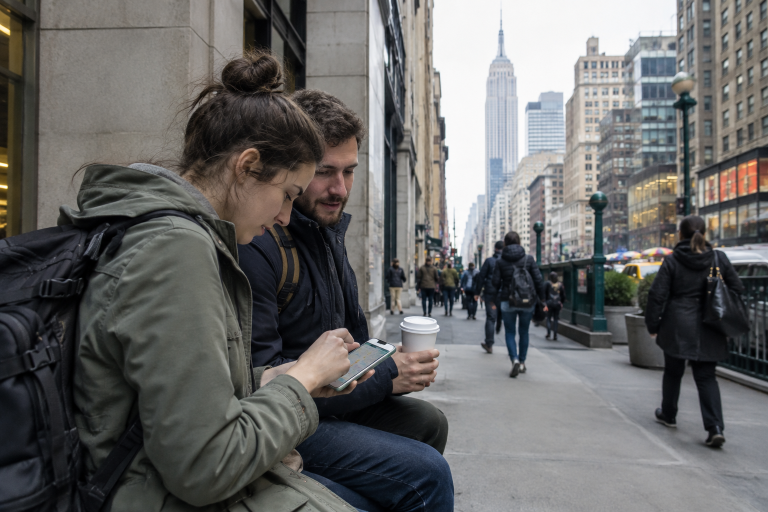
New York has more worthwhile attractions than most visitors can see in a single trip. Geographic planning helps you enjoy them without turning the day into a chain of long rides. Treat each portion of the day as a zone: Midtown in the morning, one nearby indoor attraction after lunch, then an evening neighborhood that does not require retracing your path.
Place your anchor attraction on a map, then identify nearby food, restrooms, subway access, and a weather-proof alternative. Allow more time than the map suggests for dense sidewalks and large buildings. For a more comfortable walking day, use public plazas, benches, and pedestrian infrastructure where available, since public seating and pedestrian spaces can make a short reset much easier.
Match Activities to the Time of Day
Morning
Use early hours for your most important timed entry, a popular landmark, or an outdoor walk before the day feels busier. Eat close to the first stop so breakfast does not become another cross-town errand.
Afternoon
Afternoon is ideal for museums, galleries, cafés, shops, or other indoor stops. Make lunch a real break. A seated meal can reset the group more effectively than eating while standing on a crowded sidewalk.
Late Afternoon and Evening
Save scenic walks and photographs for later if conditions are comfortable. Check closing times before committing to a late attraction, and choose dinner near the final activity so the return trip does not feel like one more obligation.
Plan for Crowds Without Chasing Empty Streets
New York’s busiest places are busy for a reason, and a lively atmosphere can be part of the experience. Rather than trying to find empty streets, book the one reservation that matters most, arrive a little early, and avoid stacking two high-demand attractions back to back. Keep a nearby café, park, bookstore, or lobby stop in mind if a line runs longer than expected.
Use Weather as a Planning Tool
Rain, wind, heat, haze, and low clouds can change the value of an outdoor plan. Check the forecast the evening before and again before leaving. Put the outdoor priority in the most comfortable window, carry water and appropriate layers, and know which indoor stop can move forward if conditions shift.
Build Accessibility into the Schedule
Accessibility should shape the route from the beginning. Review venue entrances, elevators, seating, accessible restrooms, bag policies, and transit access before the day starts. The same approach helps visitors using strollers, people managing fatigue, and mixed-age groups. Shorter walks and planned rests are not lost time. They make the itinerary more enjoyable for everyone.
Manage Budget, Bags, and Breaks
Account for transportation, admission, meals, drinks, lockers, and small convenience purchases, not only ticket prices. A city pass is useful only when its attractions fit your natural route. Pack comfortable shoes, a phone charger, water, a snack, weather protection, identification, booking details, needed medication, and a bag that complies with venue rules.
Sample One-Day Sightseeing Plan
- Morning: Have breakfast near the first attraction and arrive before the busiest period.
- Late morning: Visit the day’s main landmark, museum, historic site, or viewpoint.
- Early afternoon: Take a relaxed lunch break within the same neighborhood.
- Mid-afternoon: Choose one indoor cultural stop or an easy walk nearby.
- Late afternoon: Leave room for coffee, photos, shopping, or rest.
- Evening: Add dinner or a scenic stop only if the group still has energy.
Common Questions
How many major attractions fit into one day?
One or two major attractions is usually a practical target. Add smaller nearby stops based on walking ability, entry procedures, weather, and the pace your group enjoys.
Should every activity be booked in advance?
Reserve timed experiences that are central to the day. Keep parks, neighborhood walks, meals, and casual stops flexible whenever possible.
What should visitors do if the weather changes?
Move an indoor activity earlier, shorten the outdoor portion, and use your nearby backup option. A changed forecast does not need to cancel the entire day.
Final Thoughts
A successful New York City sightseeing day is not measured by the number of pins checked off a map. Choose one clear priority, stay within a sensible area, and leave space for food, rest, transit changes, and spontaneous moments. That slower, smarter approach creates a day that feels like New York rather than a rush through it.