Whether you own a home near downtown Dallas, manage commercial property in Gaston County, or maintain acreage outside town, the right fence should solve a practical problem. A well-planned fence can create privacy, contain pets or livestock, guide traffic, define a boundary, or secure equipment. For businesses that need durable perimeter protection and controlled access, professionally planned industrial fencing can be an important part of a larger property security strategy.
Fence projects in Dallas, North Carolina, should account for more than the length of the boundary. Sloped ground, mature trees, drainage paths, driveways, utility lines, neighborhood rules, and daily access needs can all affect the final design. Choosing carefully before construction begins helps prevent inconvenient gates, unnecessary repairs, and a fence that does not fit the property’s long-term use.
Table of Contents
- 1 Start With the Purpose of the Fence
- 2 Balance Privacy, Safety, and Visibility
- 3 Compare Common Fence Materials
- 4 Review the Property Before Choosing a Design
- 5 Check Property Lines and Local Rules
- 6 Plan Gates, Entry Points, and Access Control
- 7 Estimate Long-Term Care
- 8 Build a Practical Project Budget
- 9 Choose a Fence That Supports Everyday Life
Start With the Purpose of the Fence
Begin by identifying what the fence must do every day. A backyard privacy fence has different requirements than a farm enclosure, a pool barrier, or a commercial perimeter. When the purpose is clear, decisions about material, height, spacing, and gates become much easier.
- Backyards often benefit from solid panels that reduce views into outdoor living areas.
- Front yards may call for a lower, more open design that maintains sightlines near sidewalks and driveways.
- Pet areas need secure openings, dependable latches, and bottom clearance that prevents escape.
- Farm fencing should suit the size, strength, and behavior of the animals being contained.
- Commercial sites may need stronger materials, wider vehicle gates, and access-control features.
Balance Privacy, Safety, and Visibility
Privacy and security are related, but they are not the same. A tall, solid fence blocks views, while aluminum, ornamental steel, and chain link preserve visibility across a property. Consider whether the goal is complete screening, a visible boundary, a safe enclosure, or a combination of these needs.
Height, picket spacing, gate placement, and the space below the fence all influence daily use. A gate near a driveway should not create a blind spot for vehicles or pedestrians. A pet fence should not leave gaps beneath the panels, while a property with uneven terrain may need a stepped or racked layout to follow the grade.
Compare Common Fence Materials
Wood Fencing
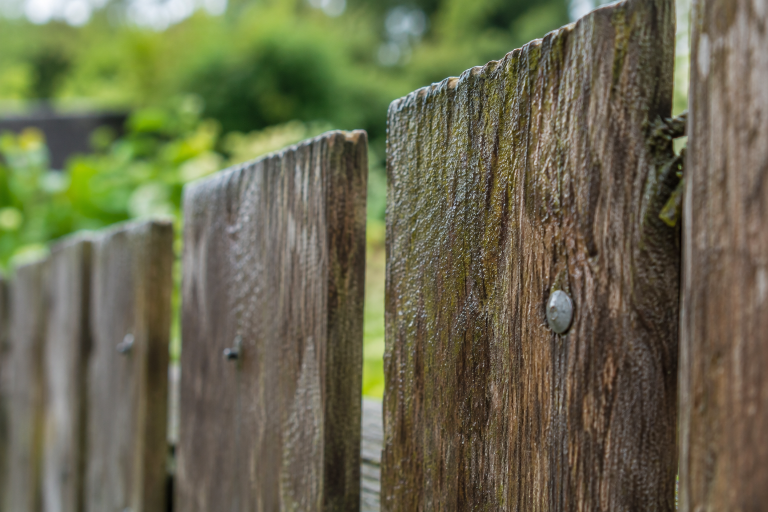
Wood offers a traditional appearance and flexibility for privacy panels, picket designs, and custom layouts. It can be a practical choice for residential properties, but it needs periodic attention. Moisture, sun exposure, insects, and contact with soil or vegetation can affect wood over time, so staining, sealing, painting, and prompt board repairs may be part of ownership.
Vinyl Fencing
Vinyl provides a clean, consistent appearance without routine painting or staining. It is commonly used for privacy, garden, and residential boundary fences. Quality materials and proper post installation still matter, particularly where gates receive frequent use or where a fence must handle changing ground conditions.
Aluminum, Steel, and Chain Link
Aluminum and ornamental metal work well where visibility matters, including landscaped yards and many pool areas. Steel and chain link can be suitable for pet runs, commercial yards, athletic spaces, and utility-related applications. Chain link can also be paired with screening when more visual separation is needed. The range of fence designs and functions reflects why one material rarely suits every property equally well.
Farm and Agricultural Fencing
Agricultural fencing should be selected around the animals, equipment, and land use involved. Consider the pressure animals may place on the fence, the need for visibility, and whether gates must accommodate tractors, trailers, or feed vehicles. A design that is easy to inspect and repair can be especially valuable on larger properties.
Review the Property Before Choosing a Design
Walk the proposed fence line before selecting a final layout. Look for slopes, roots, rocks, wet areas, retaining walls, sheds, gardens, and places where vehicles need room to turn. In the Dallas area, a site visit can also reveal where rainwater naturally moves across the yard. Blocking a drainage path or installing posts in persistently wet soil can create avoidable maintenance concerns.
It is also helpful to view the property at different times of day. Sun angle, traffic, neighboring windows, driveway activity, and existing landscaping can reveal privacy gaps or show where an extra gate would improve everyday convenience.
Check Property Lines and Local Rules
Before any excavation begins, review your survey, if available, identify easements, and confirm the location of the property line. Fence height, placement, corner visibility, pool safety features, and permitted materials may be regulated differently depending on the municipality, subdivision, or homeowners’ association.
- Review property records and survey information.
- Check HOA covenants or architectural guidelines.
- Ask the appropriate local office whether permits or setbacks apply.
- Discuss a shared boundary with neighbors before work starts.
- Protect underground infrastructure by following the guidance to call 811 before digging.
Plan Gates, Entry Points, and Access Control
A fence is only as useful as its gates. Decide early whether each opening will serve people, pets, lawn equipment, delivery vehicles, trailers, or emergency access. Gate posts, hinges, latches, and operators should match the gate’s size, weight, and expected frequency of use.
Consider whether a swing gate has adequate clearance, whether a sliding gate suits the available space, and whether a keypad, lock, remote, or intercom would make access easier. Planning these details before installation is more efficient than modifying an otherwise finished fence later.
Estimate Long-Term Care
Every material benefits from basic inspection and upkeep. Check posts, panels, rails, fasteners, hinges, and latches at least once or twice each year. Remove vines, leaves, and soil buildup that retain moisture against the fence; trim vegetation that blocks gate movement; and address loose hardware or leaning sections early.
Installation quality matters as much as material choice. Proper post depth, drainage awareness, stable gate framing, and correctly tensioned or aligned sections all contribute to a fence that performs reliably over time.
Build a Practical Project Budget
Do not compare proposals based solely on a per-foot price. The total investment can change based on material grade, fence height, site access, old-fence removal, slopes, roots, gates, hardware, automatic operators, permits, and site preparation. Request a written estimate that separates materials, labor, gate work, removal, and optional features so each quote can be evaluated fairly.
Choose a Fence That Supports Everyday Life
The best fence for a Dallas, North Carolina, property fits the way the space is used now and remains useful as needs change. By defining the purpose, evaluating the site, comparing suitable materials, checking rules, and planning access before construction, property owners can create a fence that improves privacy, safety, appearance, and convenience for years to come.