Choosing a fence in Boise, Idaho, involves more than selecting a color or picking the lowest estimate. From compact city backyards to larger lots in Kuna, Eagle, Star, Nampa, and Caldwell, the right design should fit the land, the people who use it, and the way the property may change over time. For homeowners comparing materials and layouts, Boise fence contractors provide fence and gate installation services for residential, agricultural, and commercial properties across the Treasure Valley. Based in Kuna, Fence Unlimited works with wood, metal, vinyl, chain link, gates, and specialty fencing, making the company a practical local resource for projects that need to account for neighborhood yards, acreage, pets, access, and Idaho conditions.
Table of Contents
- 1 1. Start With the Fence’s Purpose
- 2 2. Compare Wood, Metal, Vinyl, and Chain Link
- 3 3. Balance Privacy and Security
- 4 4. Plan for Pets and Children
- 5 5. Match the Fence to the Property
- 6 6. Give Gates Proper Attention
- 7 7. Prepare for Idaho Weather and Maintenance
- 8 8. Confirm Lines, Utilities, and Rules
- 9 9. Ask Better Contractor Questions
- 10 10. Use a Simple Fence Selection Guide
- 11 Conclusion
1. Start With the Fence’s Purpose
A fence should solve a specific problem. A solid backyard privacy fence may not be the most practical choice for a pasture, while an open metal fence may define a front yard without providing enough containment for a dog. Write down the primary goal before comparing materials.
- Privacy: Limit views into patios, yards, and outdoor living areas.
- Pet control: Consider height, openings, digging behavior, and reliable latches.
- Security: Focus on controlled access, visible boundaries, sturdy posts, and gates.
- Property definition: Use an open design when marking a boundary matters more than screening views.
- Livestock or acreage: Plan around animal behavior, equipment access, and long fence runs.
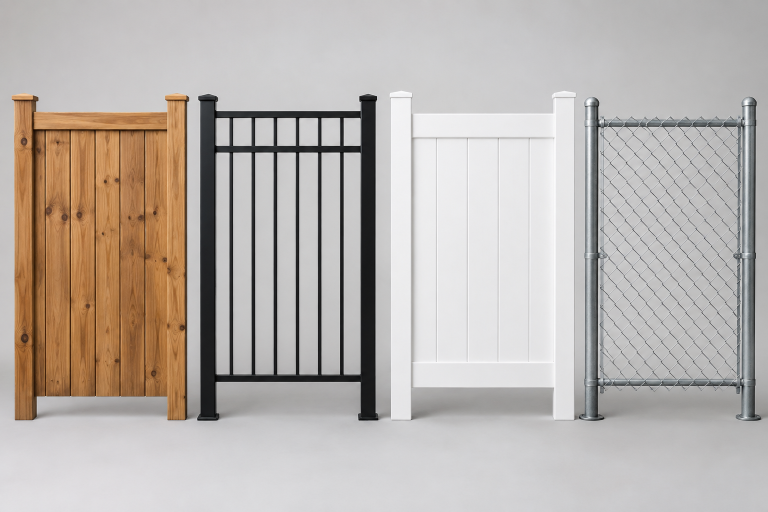
2. Compare Wood, Metal, Vinyl, and Chain Link
Wood Fencing
Wood works well for homeowners who want a traditional appearance, strong privacy, and flexible design options. It can be built in solid, semi-private, ranch-style, or decorative layouts. Wood needs routine attention over its service life, including inspections for loose boards, weathered finishes, and areas where moisture or soil stays against the fence.
Metal Fencing
Metal fencing suits properties where strength, clean lines, and visibility are priorities. It is often a good fit for front yards, pool areas, driveways, and properties with open views. Decorative metal can create a defined boundary without making a smaller yard feel enclosed.
Vinyl Fencing
Vinyl is a sensible option for owners seeking a consistent appearance with limited routine finishing work. Privacy panels, ranch rail styles, and decorative layouts can all serve different property needs. Review the quality of posts, rails, hardware, and installation details, especially where gates or wind exposure are concerns.
Chain Link Fencing
Chain link provides a practical enclosure while preserving visibility. It is often useful for dog runs, gardens, utility areas, side yards, and larger spaces where a solid privacy wall is unnecessary. Privacy slats or landscaping may provide additional screening later, but gate alignment and properly tensioned fabric remain essential for a finished appearance.
3. Balance Privacy and Security
Privacy and security overlap, but they are different design goals. A tall, solid fence can screen a yard from neighboring homes, while an open fence can make it easier to see activity around a driveway or walkway. Many properties benefit from a mixed approach, such as privacy fencing in the back and an open style facing the street.
4. Plan for Pets and Children
Design around the smallest child or animal that must stay safely within the enclosure. Check picket spacing, mesh openings, gaps beneath the fence, latch height, and the likelihood of climbing or digging. A large, energetic dog may need more height and stronger gate hardware than a quiet, small dog. For a sloped yard, discuss how the bottom of the fence will follow the grade without leaving escape gaps.
5. Match the Fence to the Property
Boise-area suburban lots often prioritize privacy, pet space, and curb appeal. Rural and small-acreage properties may need wider gates, stronger corners, room for trailers, and fencing that supports livestock or separates multiple-use areas. Before installation, consider future sheds, gardens, driveways, irrigation work, pasture divisions, and service access.
6. Give Gates Proper Attention
Gates move more than any other part of a fence, so they should never be an afterthought. Decide whether the property needs a walk gate, double gate, driveway gate, sliding gate, or automated entry. Consider the swing path, slope, drainage, snow accumulation, vehicle turning room, and whether people and pets need separate access points.
7. Prepare for Idaho Weather and Maintenance
Seasonal exposure can affect finishes, hardware, posts, and moving gates. Wood naturally gains and loses moisture, which can cause it to swell and shrink, so outdoor designs should allow for movement and avoid trapping moisture against boards. The guidance on wood and moisture relationships explains why keeping wood protected from repeated wetting and allowing for seasonal movement matters.
- Inspect posts, rails, pickets, mesh, and hardware periodically.
- Keep mulch, soil, and dense vegetation from constantly pressing against the fence.
- Clear debris around gate openings so gates can operate freely.
- Address leaning posts, loose fasteners, cracks, rot, and damaged coatings before they become larger repairs.
8. Confirm Lines, Utilities, and Rules
Do not place a fence by visual guesswork alone. Confirm property boundaries, identify easements, and call 811 before digging post holes. Idaho advises residents to request utility locating at least two business days before excavation through its 811 call-before-you-dig service. A utility locate does not replace the need to understand private lines, such as irrigation, septic, or power serving an outbuilding. Fence rules vary by jurisdiction and neighborhood. Height limits, setbacks, clear-vision requirements on corner lots, pool-barrier rules, and homeowners’ association standards can all affect a plan. Check the requirements that apply to the specific parcel before ordering materials.
9. Ask Better Contractor Questions
Compare estimates based on scope, not price alone. Ask what materials and hardware are included, how posts will be set, how the layout will be measured, who coordinates utility locating, what happens if rock or poor soil is encountered, and whether removal of old fencing is included. Also ask for gate details, expected maintenance, warranty terms, and a written breakdown of the project.
10. Use a Simple Fence Selection Guide
- For backyard privacy: Consider wood or vinyl, then compare height, gate placement, and maintenance expectations.
- For pet containment: Consider chain link, wood, or vinyl, with attention to digging, jumping, spacing, and latch security.
- For front-yard definition: Consider metal, decorative wood, or open vinyl that preserves visibility and complements the home.
- For larger acreage: Consider metal, agricultural wire, wood, or ranch-style fencing based on animals, terrain, and equipment access.
- For lower routine upkeep: Consider vinyl or finished metal, while still planning for inspections and gate maintenance.
Conclusion
The best fence for a Boise, Idaho, property is the one that works in daily life and meets the property’s actual needs. Start with the purpose of the fence: privacy, security, pets, children, livestock, property boundaries, or simply improving the appearance of the yard. Account for gates, terrain, drainage, access points, maintenance requirements, and local regulations before selecting a material. Boise’s seasonal weather can also influence how different fencing materials perform and what maintenance they may require over time. Consider how often gates will be used, whether vehicles or trailers need access, and whether future landscaping or property improvements could affect the fence line. Comparing the full project rather than focusing only on the initial installation price can provide a clearer picture of long-term needs. Careful planning before installation can help create a boundary that looks right, functions well, supports everyday use, and remains practical as the property changes.