Dog treats can make training easier, add variety to a routine, and give owners a practical way to reward good behavior. Still, treats are food, so the package matters. Whether you are choosing soft bites, a chew, or a best single ingredient dog treat, the label can help you decide whether it fits your dog’s daily diet and individual needs.
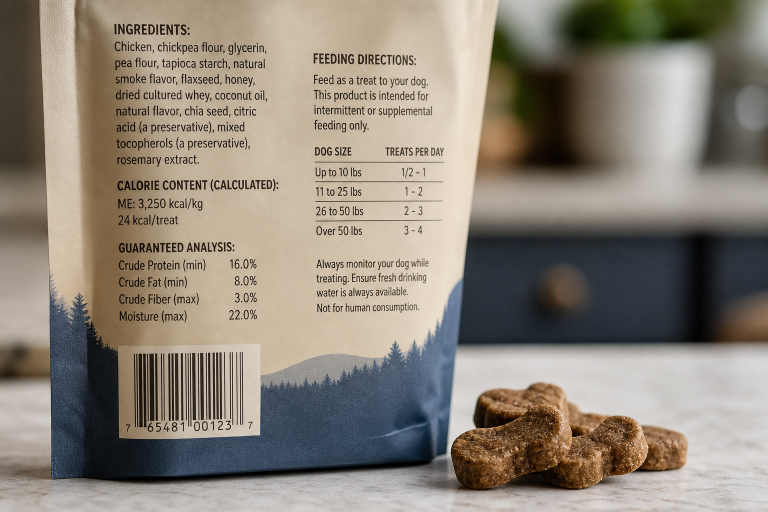
A colorful front panel may catch your attention, but the most useful details are usually on the back or side of the package. Read the ingredients, calorie information, intended use, feeding directions, and storage instructions before making a treat part of your routine.
Table of Contents
- 1 Why Dog Treat Labels Matter
- 2 How to Read the Ingredient List
- 3 Marketing Claims That Need Context
- 4 What to Check on the Nutrition Panel
- 5 Choosing Treats for Different Uses
- 6 Managing Treat Portions
- 7 Matching Treats to Health Needs
- 8 Safety, Storage, and Supervision
- 9 Quick Dog Treat Shopping Checklist
- 10 Common Questions About Dog Treats
- 11 Conclusion
Why Dog Treat Labels Matter
Treats can add up quickly when they are used for walks, visitors, training sessions, and bedtime routines. Unlike most everyday dog foods, treats are not usually intended to provide complete and balanced nutrition. The details that help you compare products, including ingredient order, nutrient guarantees, and intended use, appear on pet food labels rather than in promotional wording alone.
How to Read the Ingredient List
Ingredients are listed in descending order by weight before processing. Start with the first several ingredients rather than judging a product by a single featured item on the front. A clearly named ingredient, such as chicken, salmon, oats, pumpkin, or sunflower oil, tells you more than a broad description. Terms such as “animal digest” identify an ingredient category but do not name a particular animal species, which may matter if your dog has a known sensitivity.
An unfamiliar ingredient is not automatically a problem. It may be a nutrient, preservative, flavoring, or processing aid with an accepted use in pet food. For a dog with a diagnosed food allergy, however, ask your veterinarian how to evaluate the full ingredient list and avoid making assumptions based only on a product’s main protein.
Marketing Claims That Need Context
Words such as “premium,” “holistic,” and “natural” can describe a product’s positioning, but they do not replace a close reading of the label. “Grain-free” only tells you that grains are absent. It does not, by itself, establish that a treat is better for every dog. Likewise, “single-protein,” “limited ingredient,” and “human-grade” claims should be checked against the complete ingredient list, calorie content, and your dog’s needs.
Be especially cautious about claims that imply a product will prevent, treat, or cure a disease. A treat is not a substitute for veterinary diagnosis or treatment. When a claim sounds unusually broad, compare it with the product’s intended use and seek professional advice for health concerns.
What to Check on the Nutrition Panel
The guaranteed analysis lists minimum crude protein and crude fat, plus maximum crude fiber and moisture. These figures are useful for a general comparison, but products with very different moisture levels are not directly comparable by percentages alone. Calorie information is particularly practical because it lets you account for repeated rewards throughout the day.
Also look for feeding directions and whether the package calls the product a treat, snack, chew, topper, or complete food. Most treats do not need a nutritional adequacy statement because they are meant for intermittent use. A product described as complete and balanced serves a different role from an occasional reward.
Choosing Treats for Different Uses
- Training rewards: Choose small, soft pieces that your dog can eat quickly without interrupting the lesson.
- Occasional rewards: Reserve richer or larger treats for less frequent use.
- Long-lasting chews: Match the size and hardness to your dog’s chewing style, and supervise use.
- Food toppers: Use small amounts so the main diet remains the meal’s foundation.
- Dental-focused products: Treat these as an addition to home dental care and veterinary dental guidance, not a replacement for brushing.
Managing Treat Portions
Consider treats part of your dog’s daily food intake. Breaking a larger reward into several tiny pieces can keep training productive without repeatedly adding full-size portions. In some situations, a portion of your dog’s regular kibble can work as a training reward.
- Set aside the day’s treats before training begins.
- Keep the bag or container out of reach of pets.
- Monitor appetite, stool quality, energy level, and body condition.
- Discuss persistent weight gain or digestive changes with a veterinarian.
Matching Treats to Health Needs
Puppies, adult dogs, seniors, and pregnant or nursing dogs can have different nutritional considerations. Dogs with obesity, diabetes, kidney disease, pancreatitis, dental pain, or food allergies may need more specific treatment choices. Extra foods can also interfere with a therapeutic diet, so get approval from the veterinarian managing that plan. Introduce any new treat gradually and stop using it if your dog develops vomiting, diarrhea, itching, or other concerning changes.
Safety, Storage, and Supervision
Follow the package instructions for storage and use-by dates. Heat, moisture, and a poorly sealed bag can affect freshness. Keep treats in their original package when possible, or move them to a clean, labeled container. Dogs should be watched with unfamiliar chews, very hard items, or treats that could be swallowed in large pieces.
Quick Dog Treat Shopping Checklist
- Is the product clearly identified as a treat, snack, chew, topper, or food?
- Can you find and read the complete ingredient list?
- Is the protein source clearly named when that matters for your dog?
- Does the package provide calorie information, feeding guidance, and storage instructions?
- Does the texture suit your dog’s size, teeth, and chewing habits?
- Could it conflict with a veterinary diet or known food sensitivity?
Common Questions About Dog Treats
How many treats can a dog have each day?
The right amount depends on the dog’s calorie needs, body size, activity, health, and the calories in each treat. A veterinarian can help set an appropriate daily plan.
Are grain-free treats better?
Not necessarily. Grain-free is an ingredient characteristic, not a universal measure of quality or suitability. Evaluate the entire recipe and your dog’s individual needs.
What if my dog gets sick after a new treat?
Stop offering the treat, keep the package, and contact your veterinarian if symptoms are severe, persistent, or worrying.
Can treats help with training?
Yes. Small, appealing rewards can support consistent training when portions are controlled and fit within the dog’s normal food routine.
Conclusion
Better dog treat choices do not have to be complicated. Read beyond the front label, select a texture and portion that fit your dog, and use treats as a thoughtful supplement to a balanced diet. Clear labels, sensible portions, safe storage, and attention to your dog’s response are more useful than chasing the most expensive package.