Homes in Atlanta and Nashville face humid summers, heavy rain, falling leaves, strong winds, and occasional hail or winter ice. A practical maintenance plan helps homeowners stay ahead of those conditions instead of waiting for a ceiling stain, overflowing gutter, or loose shingle to reveal a larger problem.
For homeowners who find roof damage or signs of a leak during a seasonal check, Residential Roofing Repair & Replacement in Atlanta & Nashville can provide a clear next step. The goal is not to create a long list of unnecessary projects. It is to identify what needs attention, understand why it matters, and make repairs in the right order.
Table of Contents
Why a Home Exterior Plan Matters
Your roof, gutters, siding, trim, windows, doors, and foundation work together to manage water and protect the structure. When one area fails, water can travel where it does not belong. For example, a clogged gutter can overflow onto trim, siding, landscaping, and areas near the foundation. A loose shingle or damaged flashing detail can allow water beneath roofing materials.
Routine maintenance makes these issues easier to spot while they are still limited. In Atlanta and Nashville, weather changes can be quick, so a short walk-around after a significant storm is often just as useful as a scheduled seasonal inspection. The National Weather Service notes that thunderstorms in Georgia can bring gusty winds and hail, while Middle Tennessee weather alerts regularly address heavy rain, damaging winds, and hail risks.
Water control deserves special attention because it affects several parts of the home at once. The EPA’s guidance on moisture control for building maintenance includes roofs, walls, site drainage, and foundations, which reflects how closely these systems are connected.
Start With a Safe Ground-Level Walkaround
A thorough inspection does not need to begin on a ladder. Start at the driveway or sidewalk and walk around the home in one direction. Bring a phone or camera so you can compare photos from season to season.
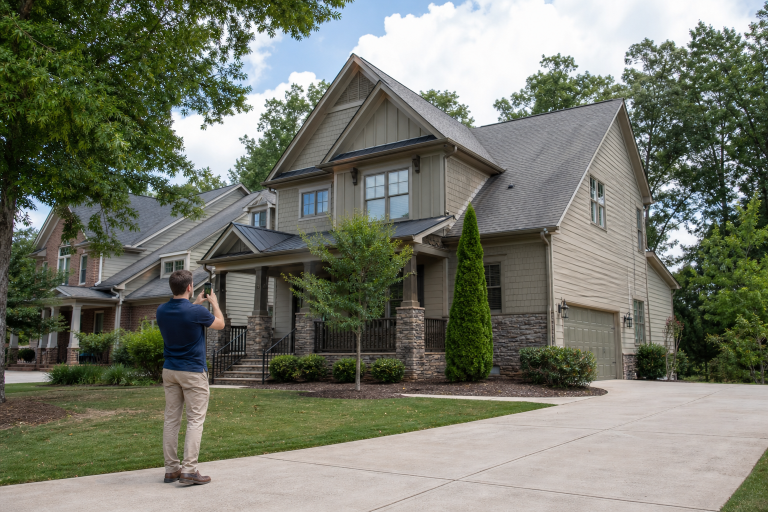
- Look at roof edges for missing, lifted, curled, or uneven shingles.
- Check gutters for sagging sections, rust, visible debris, or water marks beneath the gutter line.
- Follow each downspout and see where water is likely to discharge during rain.
- Inspect siding, trim, window edges, door frames, vents, and exterior caulk for gaps or visible deterioration.
- Look near the foundation for standing water, washed-out soil, cracks that appear to be changing, or vegetation pressing against the wall.
- Record the inspection date, recent weather, and any area that needs another look.
A ground-level inspection cannot reveal every roofing concern, but it can help you notice changes. Avoid climbing onto a roof without the proper equipment, experience, and safe conditions. Wet shingles, steep slopes, unstable ladders, and nearby power lines all create risks that are not worth taking casually.
Seasonal Home Exterior Maintenance Checklist
Spring Checks
- Clear leaves, twigs, and winter debris from accessible gutters and downspout openings.
- Look for roof damage after winter rain, ice, wind, or fallen branches.
- Check siding and trim for cracks, swelling, peeling paint, or soft wood.
- Inspect caulk around windows, doors, vents, and exterior fixtures.
- Watch for water pooling near the home after rain.
Summer Checks
- Trim branches that touch the roof or hang directly over it.
- Look for algae, mildew, or moss on shaded exterior surfaces.
- Check sun-exposed paint, caulk, and siding for fading, cracking, or separation.
- Confirm that downspouts are directing water away from the home without eroding nearby soil.
- Schedule painting or siding repairs when the affected surfaces are dry and stable.
Fall Checks
- Clean gutters before leaf buildup becomes heavier.
- Inspect flashing around chimneys, skylights, vents, and roof-to-wall transitions.
- Secure loose trim, shutters, outdoor furniture, and other items that could move during strong winds.
- Check roof drainage before periods of frequent rain and colder weather.
Winter Checks
- Watch interior ceilings, upper walls, and attic spaces for new water stains or damp odors.
- Inspect from the ground after high winds, snow, ice, or major storms.
- Keep stored materials, soil, and mulch from staying in direct contact with exterior walls.
- Postpone risky outdoor work when surfaces are icy, wet, or windy.
Roof and Gutter Priorities
When several exterior projects compete for attention, begin with anything that affects water flow. Missing shingles, exposed roof material, damaged flashing, sagging gutters, separated downspouts, and active leaks should take priority over painting or decorative improvements. Gutter guards may reduce debris buildup, but they still need periodic inspection because debris can collect on top of guards or at downspout connections.
Pay attention to dark streaks on fascia boards, stains beneath gutters, and soil that repeatedly washes away near downspouts. These signs do not always mean the same repair is needed, but they are worth documenting and evaluating. The National Weather Service’s storm hazard information for north and central Georgia also reinforces why Atlanta homeowners should check for structural and tree damage after severe weather.
Inspecting Siding, Trim, and Paint
Exterior paint is a finish, not a repair for moisture damage. Before repainting, look for soft wood, open joints, loose siding, swelling around window trim, recurring peeling, and stains below rooflines. Corners, lower wall sections, window edges, and areas behind shrubs often deserve closer attention because they may stay damp longer than open surfaces.
Cleaning can improve appearance, but use care. High-pressure washing can force water behind some siding materials or damage fragile trim and finishes. Use the cleaning method recommended for the specific material, and correct the source of moisture before applying new paint, caulk, or replacement trim.
How To Rank Exterior Repairs
- Handle safety concerns first. Loose materials, unstable structures, exposed wiring, and unsafe roof conditions need prompt attention.
- Stop active water entry. Leaks, blocked drainage, damaged flashing, and overflowing gutters should move to the top of the list.
- Prevent ongoing decay. Repair rotted trim, damaged siding, and deteriorating roofing components before the affected area expands.
- Improve weather protection. Replace failed caulk, address ventilation concerns, and improve drainage once urgent repairs are managed.
- Complete cosmetic work last. Painting and surface cleaning are more effective after the exterior is dry, sound, and properly repaired.
DIY Tasks and Professional Tasks
Tasks Many Homeowners Can Handle
- Performing a ground-level walkaround and taking photos.
- Checking visible downspout discharge areas.
- Removing light debris from safe, accessible locations.
- Noting cracked caulk, peeling paint, stains, or loose materials.
Tasks Better Left to a Qualified Professional
- Roof inspections that require climbing or walking on the roof.
- Shingle, flashing, metal roofing, or leak repairs.
- Work near power lines, tall ladders, or unstable surfaces.
- Repairs involving structural rot, storm damage, or possible insurance documentation.
Build a Simple Maintenance Calendar
Set a reminder for one exterior inspection at the start of each season, then add an extra check after hail, heavy rain, strong winds, or falling branches. Keep photos, contractor invoices, product information, and repair notes in one folder. Over time, those records can make it easier to see whether a small issue is stable, improving, or becoming a larger concern.
A dependable exterior plan for an Atlanta or Nashville home is straightforward: manage water, watch for changes, make safe repairs early, and ask for qualified help when the problem cannot be assessed safely from the ground.