In Springdale, electrical safety is not something to consider only after an outlet fails or the lights go out. Changing weather, summer cooling demands, and home improvement plans can all expose weaknesses in a home’s electrical system. A quick visual check and a simple household plan can help Springdale residents notice concerns early, before a storm, heat wave, or renovation adds pressure. When warning signs point to wiring, outlets, a panel, or a service connection, professional evaluation is the safer choice. Electrician Springdale, AR, services from Nwa C&S Electric include residential and commercial repairs, troubleshooting, lighting installations, panel upgrades, wiring, and smart home work. Its Springdale service page covers the types of electrical concerns local homes and businesses may face, while the company serves Springdale and nearby Northwest Arkansas communities.
Table of Contents
- 1 Start With Electrical Warning Signs in Your Springdale Home
- 2 Prepare Your Springdale Home Before a Storm
- 3 Handle Power Outages and Storm Damage Carefully
- 4 Watch for Heat-Related Electrical Stress During Springdale Summers
- 5 Plan Electrical Work Before Renovations in Springdale
- 6 Know When a Repair Should Not Wait
- 7 Choose an Electrical Professional With the Right Questions
- 8 Use a Simple Monthly Safety Check
- 9 Conclusion
Start With Electrical Warning Signs in Your Springdale Home
Homeowners do not need to diagnose an electrical system to recognize that something is wrong. Treat the following issues as reasons to stop using the affected outlet, switch, cord, or appliance until it can be checked:
- Lights that repeatedly flicker, dim, or brighten unexpectedly.
- Buzzing, crackling, or sizzling sounds from a switch, outlet, fixture, or panel.
- Outlets or switches that feel warm, look discolored, fit plugs loosely, or show scorch marks.
- A burning odor near electrical equipment.
- Breakers that trip frequently or trip again immediately after being reset.
- Frayed extension cords, damaged appliance cords, or exposed outdoor wiring.
One tripped breaker can result from a temporary overload, but repeated trips are not normal household maintenance. Do not keep resetting a breaker to restore power. A breaker is designed to interrupt power when it detects a problem, and the underlying cause should be identified.
Prepare Your Springdale Home Before a Storm
Northwest Arkansas can experience thunderstorms, high winds, hail, tornado conditions, and flash flooding. The severe weather guidance from the University of Arkansas emphasizes knowing the difference between a watch and a warning, receiving alerts in multiple ways, and having a shelter plan ready.
- Charge phones, portable power banks, and essential battery-powered devices before severe weather arrives.
- Unplug sensitive electronics before the storm if it can be done safely and well before lightning is nearby.
- Move extension cords, chargers, and portable electrical devices away from windows, exterior doors, and possible flood paths.
- Clear leaves, branches, and debris away from outdoor electrical equipment without touching utility lines or service connections.
- Make sure every adult in the household knows where the main electrical shutoff is located.
- Keep flashlights and fresh batteries available instead of relying on candles during an outage.
Handle Power Outages and Storm Damage Carefully
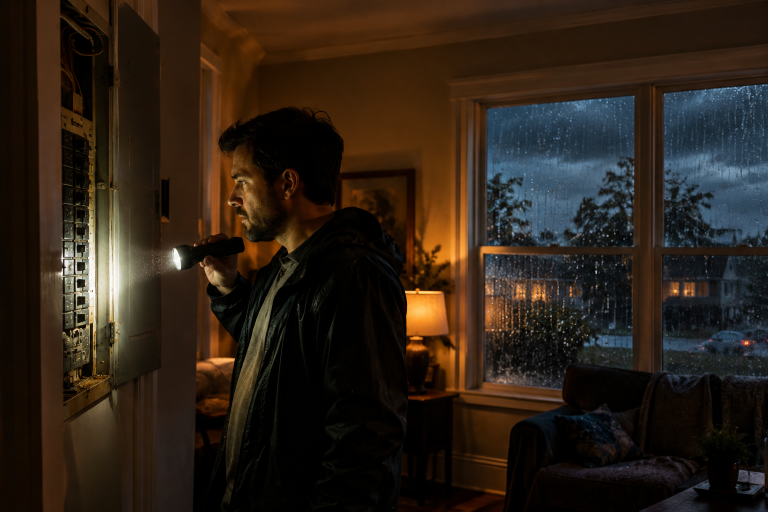
After an outage, assume downed lines are energized and keep people and pets away from them. Do not enter a flooded room that contains outlets, appliances, cords, or electrical equipment until power has been safely disconnected. Turn off appliances that were running when the outage began, and leave one light switched on so you can tell when service returns. For outages or visible utility-line damage, report the issue to the utility provider rather than attempting a repair. Arkansas storm preparedness advice also recommends charging mobile devices in advance, creating an emergency plan, and reporting outages promptly through available utility channels.
Watch for Heat-Related Electrical Stress During Springdale Summers
Summer heat can increase the use of air conditioners, fans, refrigerators, and other major appliances. Problems often arise when several high-demand devices share a single circuit. Avoid plugging a portable or window air conditioner into a damaged or undersized extension cord. Follow the appliance manufacturer’s instructions, and use an appropriate wall outlet whenever required. Keep the electrical panel accessible and free of boxes, paint cans, tools, and stored materials. If a breaker feels hot, a panel produces an odor, or a circuit trips repeatedly while cooling equipment is running, turn off the affected equipment and arrange for prompt service.
Plan Electrical Work Before Renovations in Springdale
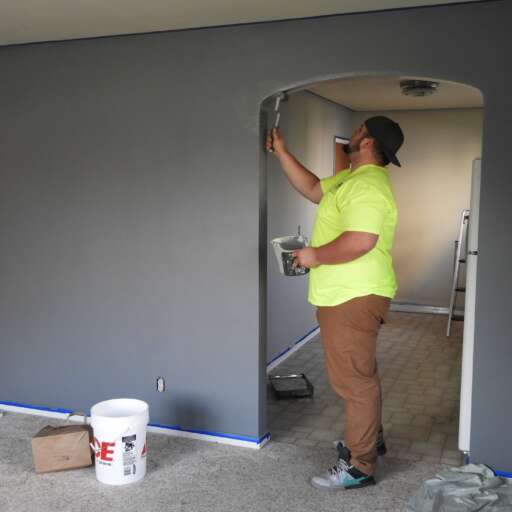
Renovations can change how a home uses electricity. A kitchen update, garage conversion, new room, workshop, or electric appliance may require more capacity than the existing system was designed to provide. Before walls are closed or new equipment is purchased, consider these questions:
- Can the existing panel support the added load?
- Will major appliances or equipment need dedicated circuits?
- Are ground-fault protected outlets needed in kitchens, bathrooms, garages, laundry areas, and outdoor spaces?
- Will temporary wiring be protected from moisture, nails, sharp edges, and foot traffic?
- Do local permits or inspections apply to the scope of work?
Electrical work behind walls is especially important to plan correctly. A qualified professional can assess the existing system, explain practical options, and help ensure the work is tested when complete.
Know When a Repair Should Not Wait
Call for Prompt Help When
- Smoke, sparks, or a burning smell come from an outlet, switch, appliance, or panel.
- Water has reached electrical components, or a flooded area contains energized equipment.
- A breaker will not reset or trip immediately.
- Lights stay unstable after a storm.
- An outlet is hot, loose, scorched, or damaged.
- Storm debris has pulled on a service line or outdoor wiring.
Routine Electrical Projects May Include
- Lighting upgrades and ceiling fan installation.
- Outlet and switch replacement.
- Panel evaluations and capacity planning.
- Smart home wiring.
- Electrical work for a new room, garage, or business space.
Choose an Electrical Professional With the Right Questions
Before scheduling service, ask whether the professional is properly qualified for the project, handles both repairs and planned installations, explains findings in plain language, and includes permits or inspections when they apply. Also, ask how the completed work will be tested. Clear answers help homeowners understand both the immediate repair and any options for preventing a repeat issue.
Use a Simple Monthly Safety Check
Set aside a few minutes each month to test smoke and carbon monoxide alarms, inspect cords and power strips, look for warm or damaged outlets, and keep storage clear of the electrical panel. Check outdoor cords before using them, review the location of the main shutoff, and note any flickering lights or unusual appliance behavior. Small observations can make it easier to address a developing issue before storms, summer heat, or a renovation makes it more urgent.
Conclusion
Electrical safety in Springdale starts with recognizing warning signs and preparing before problems become emergencies. Homeowners can reduce avoidable risks by checking outlets and cords, avoiding overloaded circuits, preparing for severe weather, and keeping electrical equipment away from moisture and flood-prone areas. Renovations and new appliances should also be planned with the home’s existing electrical capacity in mind. While simple visual checks can help identify concerns, issues involving wiring, panels, service connections, repeated breaker trips, or storm damage require professional evaluation. A regular safety routine, combined with prompt attention to unusual electrical behavior, can help Springdale households maintain a safer, more reliable electrical system amid changing weather and home improvement projects.