
For busy households in Winston-Salem, a practical carpet routine starts with small habits that fit normal life. Seasonal rain, pollen, muddy shoes, pet hair, and day-to-day foot traffic can all make carpeted rooms look worn before the rest of the home does. Knowing when routine care is enough and when to consider carpet cleaning can help homeowners create a more manageable plan.
The goal is not to keep every carpet fiber perfect at all times. It is to reduce loose soil, respond to spills quickly, avoid excess moisture, and give heavily used spaces the attention they actually need.
Table of Contents
- 1 Why Routine Matters More Than Occasional Cleaning
- 2 Build a Weekly Carpet Care Schedule
- 3 Focus on High-Traffic Areas
- 4 Handle Spills Before They Become Stains
- 5 Adjust the Routine for Pets and Children
- 6 Match Cleaning Methods to Carpet Fibers and Rugs
- 7 Consider Indoor Air and Moisture
- 8 Know When Deeper Cleaning Helps
- 9 Avoid Common Carpet Care Mistakes
- 10 Use a Simple Carpet Care Checklist
- 11 Keep the Routine Realistic
Why Routine Matters More Than Occasional Cleaning
Carpet catches the material that comes in with everyday living, including grit, hair, crumbs, and dust. A carpet can look acceptable on the surface while soil settles farther into the pile. Regular care helps prevent a gradual buildup from becoming a much larger job.
A simple routine also makes it easier to notice changes. For example, a hallway may begin to look duller than a nearby bedroom because people take the same route through the house every day. Addressing that area early is more realistic than waiting until every room needs attention.
When a household needs help with a broader reset, residential carpet cleaning may be part of a plan that also includes consistent vacuuming and prompt spot treatment afterward.
Build a Weekly Carpet Care Schedule
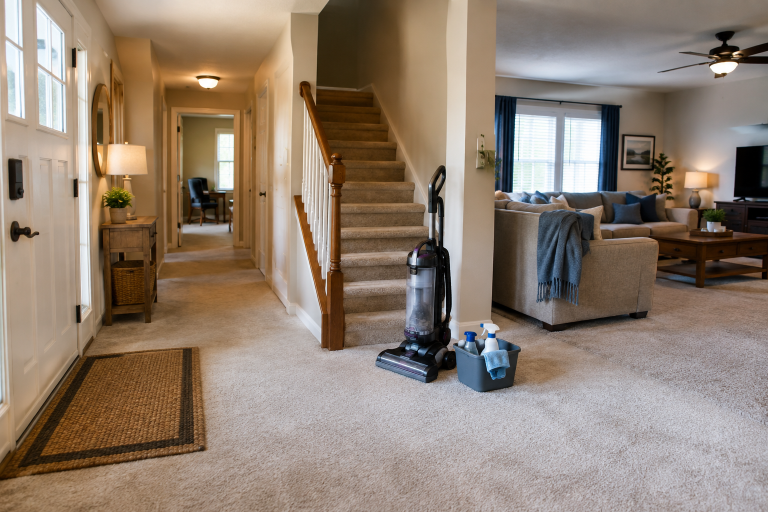
A schedule should follow how each room is used, not a rigid rule that is difficult to maintain. Consider this starting point:
- Daily: Pick up visible debris and blot fresh spills.
- Several times a week: Vacuum entryways, hallways, kitchens, stairs, and family rooms when they are carpeted.
- Weekly: Vacuum bedrooms, edges, and areas around furniture that are safe to reach.
- Monthly: Empty or replace vacuum bags, clean filters as directed, and check attachments for tangled hair or debris.
- Seasonally: Wash or replace entry mats, inspect areas affected by damp shoes, and review furniture placement in traffic lanes.
Focus on High-Traffic Areas
Entryways, stairs, hallways, and family rooms receive repeated pressure and abrasion. Slow, overlapping vacuum passes can be more useful than a quick pass over the center of the room. Give attention to corners and edges, where dust and pet hair often collect.
Washable mats or runners can be helpful near exterior doors when they do not create a tripping hazard. In homes where furniture allows, slightly changing the main walking path can also reduce concentrated wear in a narrow strip of carpet.
Handle Spills Before They Become Stains
Use a calm, low-moisture approach
- Lift solid material with a spoon or dull edge.
- Blot liquid with a clean, white, absorbent cloth.
- Work from the outer edge toward the center.
- Use a small amount of product that is appropriate for the carpet.
- Test an unfamiliar product in a hidden area first.
- Blot remaining moisture and let the area dry completely.
Blotting is different from scrubbing. Aggressive scrubbing can spread the spill, push it deeper into the carpet, or leave the fibers looking rougher than the surrounding area.
Adjust the Routine for Pets and Children
Homes with pets or young children may need more frequent vacuuming because of fur, tracked-in dirt, crumbs, and unexpected spills. Keep cleaning products secured, follow label directions, and keep children and animals away from damp carpet until it is fully dry.
Recurring odors deserve closer attention than a scented spray can provide. The source may be residue, moisture, or a spill that reached the backing or padding, so masking the smell does not necessarily solve the underlying issue.
Match Cleaning Methods to Carpet Fibers and Rugs
Not every floor covering responds the same way to water, agitation, or cleaning products. Wool, synthetic carpet, natural-fiber rugs, and delicate area rugs can have different care requirements. Check the care label and manufacturer guidance before applying a cleaning solution.
Fringe, unstable dyes, shrinkage, and fragile backing can be concerns with some rugs. Valuable, handmade, antique, or heavily damaged rugs may require advice from a qualified specialist before any attempt at at-home cleaning.
Consider Indoor Air and Moisture
Carpet care is one piece of a larger indoor environment plan. The EPA notes that regular cleaning, routine vacuuming, source control, and ventilation can help reduce exposure to indoor biological contaminants. At the same time, its guidance also emphasizes that dampness should be addressed promptly. Routine cleaning and moisture control are especially relevant after wet shoes, leaks, or spills.
Vacuuming does not make indoor air allergen-free, and it is not a substitute for medical guidance. Households managing asthma or allergies may need a more tailored approach, including following HVAC equipment instructions for filter changes and maintaining appropriate ventilation.
Know When Deeper Cleaning Helps
Consider deeper cleaning when traffic lanes remain dull after vacuuming, spots return, carpet feels sticky, or odors persist. Timing depends on household size, pets, carpet type, and the amount of indoor and outdoor traffic.
Before arranging service, ask about pricing, cleaning methods, expected drying times, furniture policies, and preparation requirements. Wet carpet can contribute to indoor air quality concerns, which is why the EPA identifies it as a potential source of indoor air pollution.
Avoid Common Carpet Care Mistakes
- Using more cleaning solution than necessary.
- Scrubbing a fresh spill hard enough to damage fibers.
- Ignoring corners, edges, and stairs.
- Using a product without checking carpet instructions.
- Placing furniture or rugs over carpet before it dries.
- Using fragrance to cover a continuing moisture or odor issue.
Use a Simple Carpet Care Checklist
- Use mats at main entrances and remove shoes when practical.
- Vacuum according to traffic levels.
- Blot spills promptly instead of scrubbing.
- Use carpet-safe products sparingly.
- Check damp areas quickly and dry them thoroughly.
- Follow care instructions for rugs and specialty fibers.
- Plan deeper cleaning when routine care no longer improves the carpet.
Keep the Routine Realistic
Effective carpet care does not need to consume an entire weekend. A few reliable habits can reduce buildup, protect the appearance of carpeted rooms, and make larger cleaning tasks easier to manage. The best routine for a Winston-Salem home is one that fits the flooring, the season, and the people who use each room.

