From busy Edmonton fabrication shops to Calgary construction sites and northern Alberta industrial yards, lifting equipment must be ready for demanding work, changing weather, and tight project schedules. A practical inspection plan helps crews identify problems before they lead to unsafe lifts, costly downtime, or damaged loads.
Equipment owners can support that process with comprehensive crane equipment testing that addresses the structural, mechanical, and control systems behind dependable lifting operations. The strongest programs combine qualified examinations with consistent checks by the people who operate the equipment every day.
Table of Contents
Why Inspection Plans Matter
Lifting equipment can develop wear that is not obvious during a rushed start-up. Wire rope may kink or lose diameter, a hook latch may not close properly, and a limit switch may fail to respond as intended. Daily checks are essential, but they cannot replace a planned inspection program with defined intervals, responsible people, repair follow-up, and documented release decisions.
In Alberta, the rules for cranes, hoists, and lifting devices address matters such as rated load capacity, log books, repairs, load charts, and safe lifting practices. Site-specific planning is especially important where wind, cold temperatures, uneven ground, overhead utilities, traffic, or multiple trades can affect a lift.
Equipment to Include
Start with a complete asset list. Each item needs checks appropriate to its design, rated capacity, duty cycle, environment, and manufacturer’s instructions. Include:
- Mobile, crawler, rough-terrain, tower, overhead, and jib cranes.
- Forklifts, telehandlers, aerial lifts, personnel platforms, hoists, and winches.
- Hooks, shackles, chains, wire-rope and synthetic slings, spreader bars, and lifting beams.
- Below-the-hook devices, manbaskets, material-handling equipment, and specialized oilfield equipment.
How to Build the Inspection Cycle
- Identify every asset. Record its make, model, serial number, location, and rated capacity.
- Review the planned work. Consider load weight, lift path, ground conditions, weather, visibility, and electrical hazards.
- Use the right documents. Gather manufacturer instructions, previous inspection reports, maintenance history, and repair records.
- Set intervals. Separate pre-use, frequent, periodic, annual, post-repair, and event-triggered inspections.
- Assign authority. Define the roles of operators, supervisors, maintenance staff, and qualified inspectors.
- Create stop-use rules. Workers must know which findings require immediate removal from service.
Daily and Pre-Use Checks
A pre-use inspection is a frontline screening step completed before the first lift or shift. Operators should follow the equipment-specific checklist and inspect the surrounding work area. The pre-operation crane inspection guidance from the Canadian Center for Occupational Health and Safety includes checks of controls, brakes, wire rope, sheaves, and limit switches.
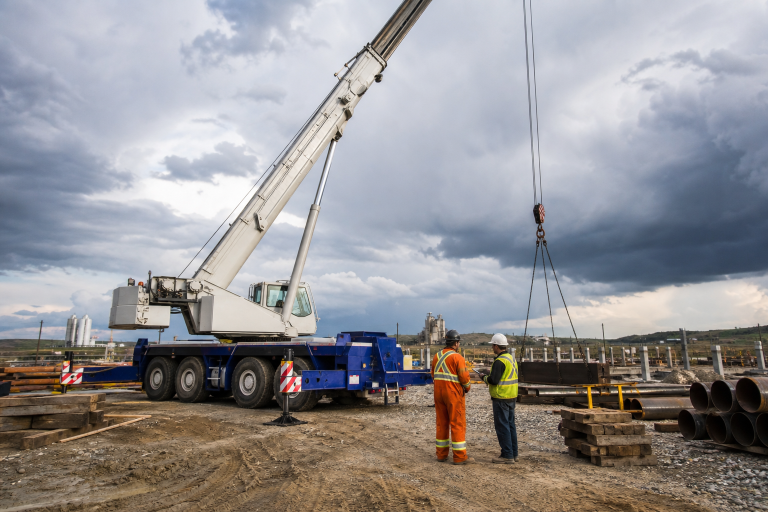
- Look for leaks, cracks, bent members, corrosion, loose fasteners, and missing guards.
- Check hooks, latches, slings, chains, wire rope, drums, sheaves, and attachment points.
- Test alarms, emergency stops, brakes, steering, lights, controls, and safety devices as applicable.
- Confirm visible load charts, capacity markings, warning labels, outrigger setup, and safe ground support.
- Assess overhead lines, weather conditions, nearby structures, pedestrian access, and any changes to the lift area.
Scheduled Inspections and Testing
Scheduled inspections go beyond a walk-around. Their timing should reflect the manufacturer’s guidance, how often the equipment works, the severity of service, previous findings, and applicable requirements. A machine that handles repetitive heavy loads in abrasive, wet, or remote conditions may need closer attention than one used occasionally indoors.
- Frequent inspections focus on operating components that are prone to wear during service.
- Periodic inspections examine structural members, controls, safety devices, and lifting components in more depth.
- Post-repair inspections verify that repairs, replacements, or modifications are suitable before return to service.
- Special inspections may be needed after an overload, collision, exposure to severe weather, suspected damage, or prolonged storage.
What Inspectors Look For
Structure and Mechanical Systems
Inspectors look for cracks, distortion, damaged welds, corrosion, missing or loose fasteners, and signs of impact or overload. They also assess pins, bearings, gears, brakes, hydraulic hoses, cylinders, drums, sheaves, and unusual noise or movement. Unauthorized modifications require particular attention because they can affect the equipment’s original design assumptions.
Electrical Systems and Lifting Accessories
A detailed review also covers wiring, grounding, batteries, controls, alarms, interlocks, limit devices, and load-monitoring systems where installed. Rigging must be correctly marked, compatible with the load and lifting points, and free of damage, including cuts, stretching, heat exposure, broken components, or excessive wear.
Handling Defects and Records
When a defect could affect safe operation, stop using the equipment, identify or isolate it, and notify the responsible supervisor or equipment manager. Record what was found, where it was located, and any immediate restrictions. Photos and measurements can help maintenance teams understand the issue without guesswork. After repair, a qualified person should complete the required follow-up inspection before the equipment is released. A useful record includes the asset identification, inspection date, inspector, observations, corrective action, repair details, approval, and return-to-service date. Digital systems can make it easier to track overdue work, repeat defects, and supporting photos, while paper logbooks can still work for smaller fleets if they are complete and accessible.
Common Mistakes and Planning Questions
Common failures include using a single generic checklist for every machine, marking equipment “good” without describing the inspection, leaving repairs open for too long, and relying on a sticker without reviewing the underlying record. Avoid these gaps by asking:
- Is the equipment suitable and inspected for this specific lift?
- Is the rated capacity adequate for the load, radius, configuration, and lifting method?
- Are operators, signal persons, and rigging personnel prepared for the task?
- Have weather, ground support, overhead hazards, and access controls been reviewed?
- Who has the authority to stop the lift if conditions change?
Conclusion
A reliable Alberta lift equipment inspection plan is clear enough for crews to use and detailed enough for supervisors to verify. Daily checks catch visible concerns, scheduled examinations identify deeper issues, and complete records connect findings to repairs and final approval. When everyone understands what to check, when to stop, and how to report a defect, lifting work becomes safer and easier to manage.